Reading:
Caesarstone Circle Member Jennifer Hutton Talks Early Education for Designers
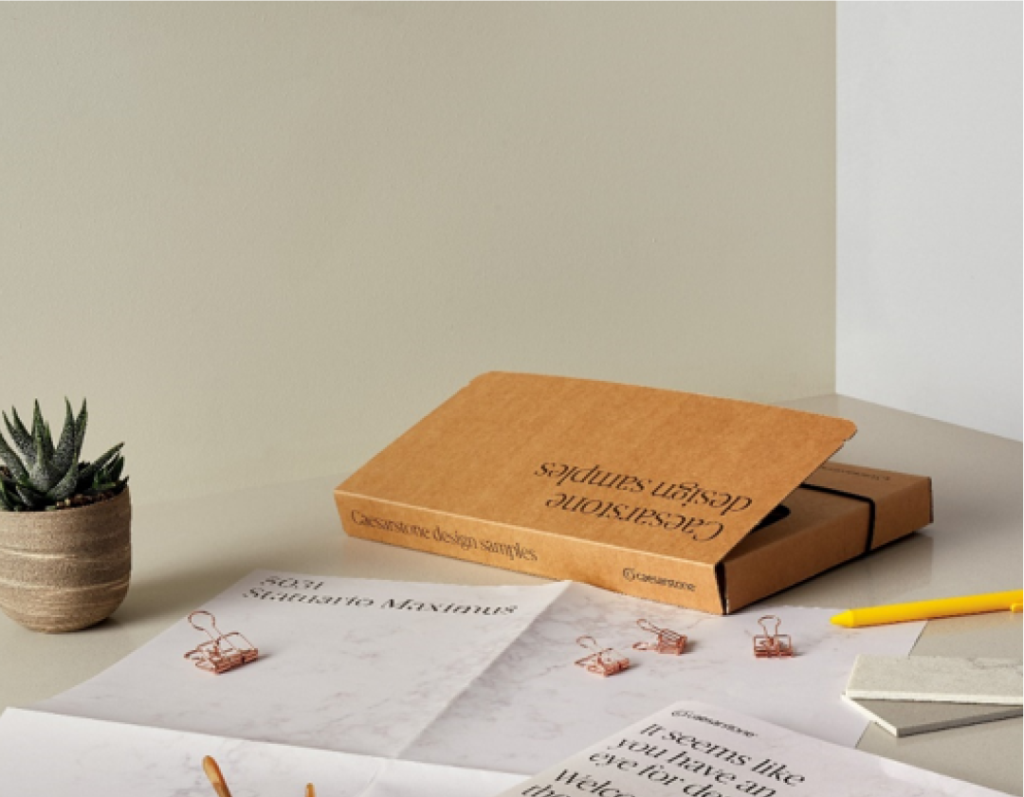
The best design decisions aren’t made from a distance. You only get part of the story on the screen, in a catalog, or from a book. Genuine product education and resulting selections need to happen in real life, as you’re hands-on to feel the texture and in the room to see nuances of shadow and light.
At Caesarstone, we know surface specification is a sensory experience. From free samples and showroom moments to design education and events, we take every opportunity to bring people and our products together. And we invest in relationships with designers who share this commitment and constantly put it into practice for their clients, as well as others in the field.
Caesarstone Circle member Jennifer Hutton of Grau Design Studio is one of the designers shaping what’s next. She’s been building her firsthand fluency since long before she had a design degree. In this article, she shares what early material experiences meant for her career and how she’s paying it forward to the upcoming generation of designers.
Hands On: What Early Material Education Does for a Designer’s Career
Written by Jennifer Hutton
I’ve been around materials since I was 18. Before I ever set foot in a design classroom, I was working in the flooring department at Home Depot right out of high school. I was introduced to marble, slate, and tile every single day, and I recall being really excited about how they sparked my creativity. Not every design student has the opportunity to be surrounded by materials all day, but I was lucky.
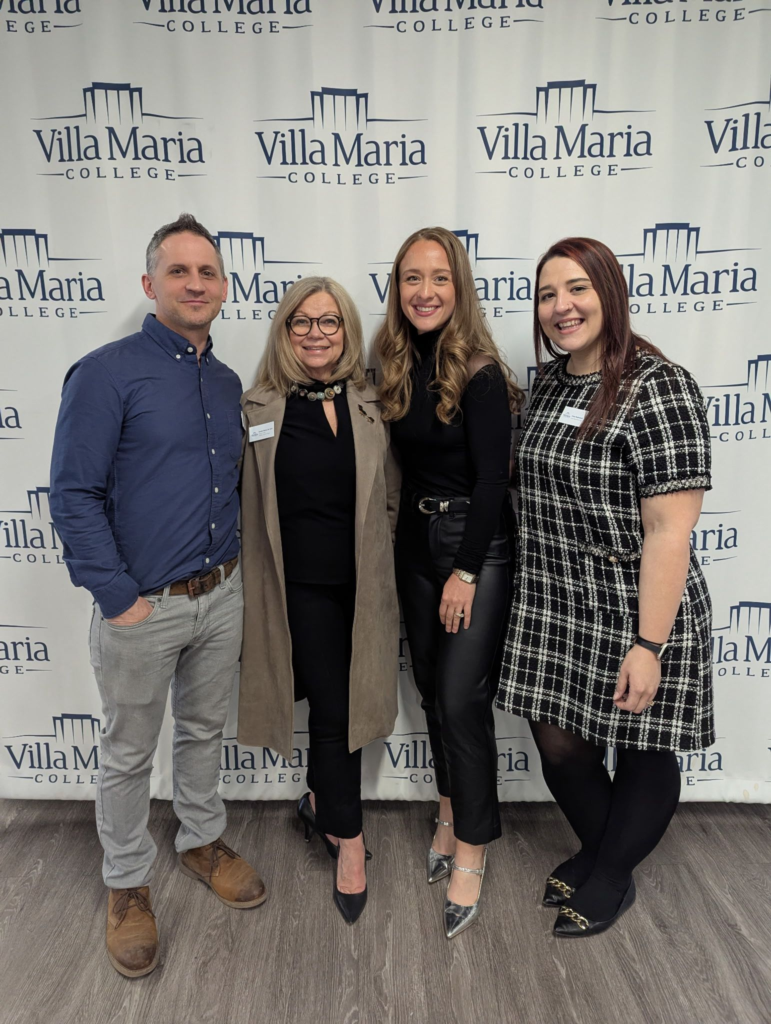
On April 1, I was back at Villa Maria College, my alma mater, hosting a master class at Kitchen Designer Day. The room was full of students getting their hands on vendor products and running tests on countertop samples. It’s the kind of material evaluation that simply cannot happen through a screen.
At Kitchen Designer Day, Caesarstone ran the full experience. We had various samples on display with everyday items — wine, metal tools, you name it — used to showcase the strength of the product. Nothing was able to “hurt” Caesarstone. That is a lived, interactive experience that stays with you, especially as young minds are learning this for the first time. They left with a greater appreciation for quality material because they saw that durability firsthand.
The Moment the Science Becomes Real
My first formal introduction to materials was a lecture on laminate at Villa. I remember sitting there looking at a thin chip and thinking about what goes into the material that makes all the difference, despite what you can see with the naked eye. Laminate is just layers of paper and glue, which is hard to see just by looking at the thin material chip.
But once you understand that it’s just layers of paper and glue compressed together, you understand why it scratches, why it can’t get wet, and which applications it’s right for, and which ones to walk away from. That’s the difference between a designer who picks a pretty color and one who knows how to specify. Knowing what a material is made of tells you where it belongs and where it will fail. You can’t learn that by scrolling a website. You learn it by holding the sample and asking the right questions.
What Quartz Can’t Communicate Through a Catalog
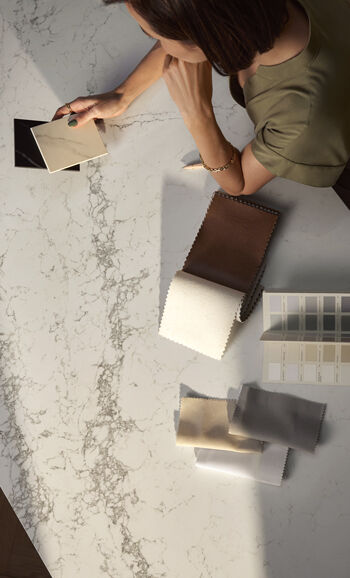
Texture and depth, hands down. While photos are getting better and AI is helping create a more complete visual experience, there is no substitute for having a sample in hand to see how it feels when you run your hands across it, how it bounces the light, and how it plays with other materials in a space.
For example, seeing the new leather material from Caesarstone in person was an experience I couldn’t have had solely looking at photos online. The depth of the veining is what sells a slab, and you only see it when you’re standing in front of one.
Put Bluntly: Students Need More of This
When I taught the kitchen and bath course at Villa, I watched this happen in real time. Being able to show materials to students in person gives them inspiration for their future projects while also giving them the foundational knowledge to make smart decisions. Hands-on learning at the academic level sparks creativity and simultaneously allows for the reasoning behind that creativity.
Villa Maria is an NKBA-affiliated school, which means the curriculum is built around industry standards, but even so, professors only have so many resources during a dense, tight semester. They just scratch the surface (pun very much intended). But having dedicated days to dive in deeper allows students to be immersed in the subject matter. Without it, they’re left to learn as they go in the field. Since there are so many stone manufacturers to choose from, it’s often luck of the draw on what their first firm likes to use.
By bringing partners like Caesarstone into the classroom, we create a pathway to familiarity. That connection means more research on the student’s end, a closer connection to the brand, and a better understanding of the products before they ever hit a client’s mood board. It moves the needle from “I think” to “I know.” It’s why I built the GDS showroom the way I did, because seeing and touching changes the decision every single time.
Ready to get hands-on at our Durham, NC showroom? Visit the GDS Showroom to see materials in person, or learn more about Jennifer to understand the background behind the approach.